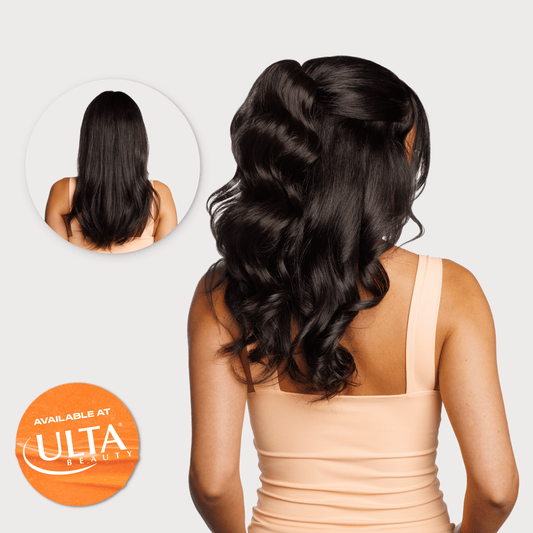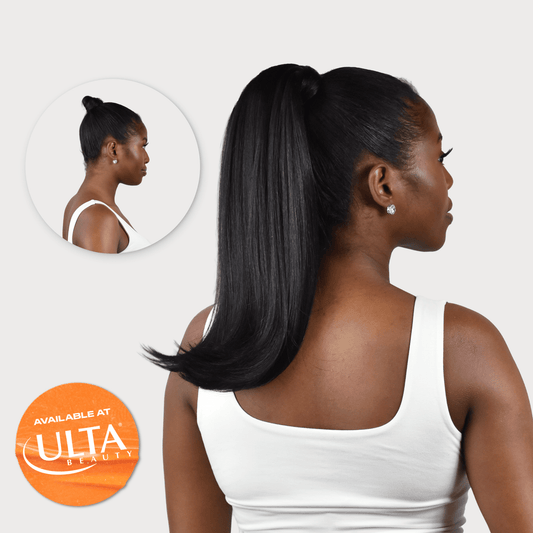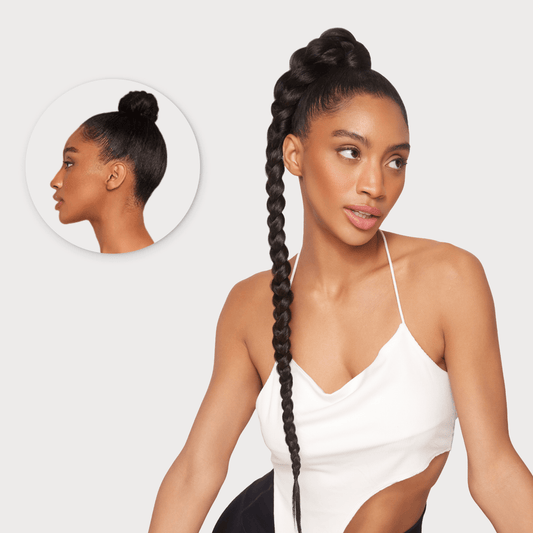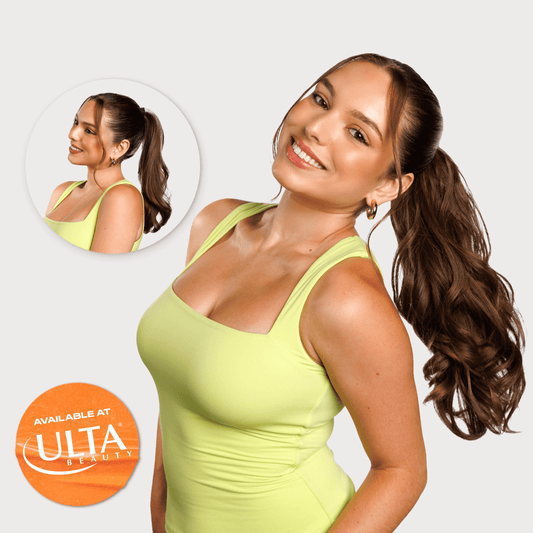


K-tip hair extensions are individual strands with a small keratin tip heat-fused to your own hair near the root. Also called keratin tip, keratin bond, or fusion extensions, they move strand by strand with no weft line or tape tab. INH Hair offers everyday clip-ins plus salon keratin tip hair extensions for longer wear.
Shop K-tip and other extension options at INH Hair!
How K-Tip Hair Extensions Work

The “K” stands for keratin, the same protein found in hair, skin, and nails. Each piece is a small bundle of extension hair finished with a pre-formed keratin tip. A trained stylist isolates a matching section of natural hair, softens that tip with a controlled fusion iron, then rolls or presses the warm keratin around the section. As it cools, it hardens into a compact bond.
The bond is not glued onto the scalp. It grips the natural hair a short distance from the root so the strand can still move. Because every piece is attached on its own, the finished head moves more like real hair than a row of tape or a sewn weft.
Quality matters here. Better lines use Remy human hair with aligned cuticles and a clean keratin formula that melts evenly and comes off with a proper bond remover. INH Pro keratin tip extensions use Italian keratin and double-drawn Remy hair, with colored bond options so the tip blends into the root. Shade planning for that blend is the same problem covered in a wider look at the best K tip hair extensions.
K-Tip vs I-Tip, U-Tip, Tape-In, and Clip-In
These names get mixed up. They are not the same job.
-
K-tip / keratin fusion: Heat-softened keratin molded around your hair. Flat or compact finished bonds. Strong hold for several months. Hair is usually not reused after removal.
-
I-tip: A slim cylinder of hair held with a small bead or micro-ring. No heat at install. Beads can be opened and moved up. Some people feel the bead more than a keratin bond.
-
U-tip: Same heat method as K-tip, different pre-formed shape. The finished bond is often a bit rounder.
-
Tape-in: Two thin wefts sandwich a slice of hair with adhesive. Faster install. Needs more frequent move-ups. Great for even volume across a section. INH also writes about tape-in hair extensions for that flatter panel look.
-
Clip-in: Temporary pieces you put in and take out the same day. No salon bond. Clip-in hair extensions are the low-commitment route when you want length for a night, not months. A separate comparison of Remy extensions or U-Clip helps when the choice is human wefts versus a single crown piece.
K-tips win on independent movement and high ponytails. Tape and clip-ins win on speed. I-tips win if you want no heat and reusable strands. Many stylists mix methods, placing K-tips at the hairline and wefts through the back.
Who K-Tip Extensions Suit Best
K-tips work well when you want custom density in exact spots: temples, part line, crown, or a thin patch. Fine to medium hair often likes them because the bonds can stay small. Coarse or thick hair can wear them too, with more strands and a careful weight plan. Lightweight options also show up in guides to the best hair extensions for thin hair.
They are a strong match if you:
-
Wear high ponytails, braids, or slick buns
-
Want face-framing pieces without a weft showing
-
Prefer fewer salon visits between full reinstalls
-
Need color placed only where the eye lands
They are a weaker match if your scalp is very sensitive to heat, your hair is too short to hide a bond, or you want to reuse the same pack of hair for a year. Then I-tip, tape, genius wefts, or a ready-to-wear half up half down hair extensions set may fit the routine better. Curly and coily hair can wear K-tips when the texture and curl pattern of the hair match. INH covers that match in its guide to curly K tip extensions. Event styles in the wedding shop often use the same idea: hide the attachment, keep the movement.
How Installation Usually Goes
Expect a longer first appointment than tape-ins.
-
Hair is washed, dried, and sectioned in a grid.
-
The stylist sizes each natural section so it can hold the strand without strain.
-
The keratin tip is placed a little off the scalp, heated, then shaped.
-
The bond cools before the next section.
-
Density is checked in a mirror and under a ponytail.
A full head can take a good chunk of a workday. A partial fill for face-framing or crown volume is shorter. Packs planned by grams per strand help a stylist map density without guessing. The hair swatch collection makes the color check before heat hits the hair. Do not DIY a first fusion install. Heat plus the wrong section size is how people get breakage. Everyday clip methods are a different skill, shown in applying INH hair extensions. After install, styling tools from the hot tools lineup should stay on the lengths, not on the keratin.
How Long They Last and How to Care for Them
With professional install and steady home care, many K-tip sets stay wearable for several months. Growth rate, oil at the root, gym sweat, and how hard you brush the bonds all change that window. INH’s notes on how long K tip extensions last put wear in the multi-month range when bonds are checked on schedule.
Daily habits that help:
-
Wash with a sulfate-free shampoo. Keep the conditioner off the bonds.
-
Brush from ends up. Hold the root so you do not tug the keratin.
-
Sleep in a loose braid or on a silk pillowcase.
-
Keep hot tools off the actual bond.
-
Skip heavy oils and thick masks right on the attachment.
-
Book a bond check every several weeks so loose pieces get handled early.
Hair care products belong on the mid-lengths, not on the fusion point. If a bond slips, do not yank it. See the stylist. Pulling a half-open bond can take natural hair with it.
Removal, Reuse, and Hair Health
Removal is a salon job. A bond-release solution softens the keratin. The stylist cracks the bond with a removal tool and slides the strand off. Residual keratin is combed out. Done right, the natural hair should not come out in clumps. K-tip hair is usually not reused the way tape wefts or I-tips are. The old tip is gone. Fresh keratin is applied if you want another cycle. That is a cost trade: fewer mid-cycle move-ups, new tips at the next full install. Tape is the opposite story, which is why tape-in hair extensions can be reused after a clean retape.
Damage is not automatic. Damage shows up when bonds are too heavy for the section, placed on broken hair, left in too long, or ripped out at home. Healthy starting hair plus a conservative strand count is the safer path. Temporary methods raise a different question, covered in the guide on whether clip-in hair extensions are bad for your hair. American Academy of Dermatology guidance on extensions is simple: extra weight and tension can stress the follicle if the method is too tight or left in past its life. K-tips follow the same rule as every other bonded method. Hybrid rows such as genius wefts hair extensions are sometimes used beside K-tips so bulk sits in a weft and the hairline stays strand-by-strand.
Common Problems and Quick Fixes
-
Bonds feel bumpy. The tip was left too round or too close to the scalp. A skilled install flattens and places it off the skin.
-
You can see tips in a high pony. Placement was too low or too sparse at the nape. Face and hairline need extra planning. A clip-in ponytail can hide a grow-out day without moving the bonds.
-
Matting at the nape. Hair was slept on wet, or bonds were oiled. Dry fully. Braid at night.
-
Shedding from the extension length. Lower-grade non-Remy hair. Switch fiber quality next time.
-
Itch in week one. Some people notice the new grid. If redness stays, have the stylist check tension and product residue.
Fine hair shows every mistake faster, which is why using extensions to add volume to thin hair starts with lighter pieces and honest section size. Heat on the lengths is fine. Heat on the tip is not. That same heat limit shows up when people heat style synthetic hair on clip-in days between fusion cycles. Marie Claire’s stylist interviews make the same point: K-tips are thin and light when the section size is honest, which is why they show up so often on fine hair that cannot hide a thick weft.
INH Hair and Professional K-Tip Options
INH Hair started as an accessible extension brand for clip-ins, ponies, and ready-to-wear pieces. The professional side, INH Pro, builds salon methods including keratin tip hair extensions, tape, and wefts.
What the Pro K-tip line is built around:
-
Authentic Italian keratin meant to flex, hold, and release clean
-
Double-drawn, cuticle-intact Remy hair
-
Embossed cut lines for pointed, half, or micro tips
-
Pre-toned, multi-tonal shades so less custom color is needed
-
Packs planned by length and grams per strand
-
Matching tools such as a fusion iron and oil-free bond remover
They can also sit next to wefts as a cocktail method: wefts for bulk, K-tips for the hairline and part. The full extensions collection groups those everyday pieces in one place. Human-hair clip options in human hair extensions clip-in fill the nights you do not want a fused grid.
Discover INH Pro K-Tip Extensions

Description (Keratin Tip Hair Extensions):
Transform your salon services with INH Pro Keratin Tip Extensions. After 2+ years of collaboration with industry-leading stylists, we've engineered premium fusion extensions using authentic Italian keratin bonds and superior Remy hair. Each strand delivers professional-grade results with seamless integration and lasting performance.
Premium Features & Professional Benefits
Authentic Italian Keratin Formula: Professional-grade bonding system offering superior strength, natural flexibility, flawless application, and gentle removal.
Superior Hair Construction: Ethically sourced, double-drawn virgin Remy hair with 100% intact cuticles for uniform thickness and brilliant shine.
Precision Installation Guides: Pre-embossed cutting lines allow customization to pointed, half, or micro tips for accelerated, accurate application.
Professional Color Collection: Complex multi-tonal shades arrive pre-toned, minimizing custom color matching requirements.
INH Pro Exclusive Manufacturing: Produced entirely in our own facility, zero white-label sourcing, never sold to competitors.

Why Choose Keratin Tip Extensions?
Superior Longevity - Bonds maintain integrity for months without degradation or whitening.
Invisible Integration - Colored bond options create undetectable blending with natural hair.
Styling Versatility - Resistant to heat tools and water exposure for worry-free styling.
Scalp-Safe Formula - Pure keratin protein composition without synthetic resins or aggressive chemicals.
Streamlined Service - Quick melting bonds and clean removal using INH Pro Oil-Free Bond Remover.
Installation Guide & Care Schedule
Application Time: 30-90 minutes using strand-by-strand keratin fusion technique
Check-Up Schedule: Bond inspection every 4-6 weeks recommended
Wear Duration: 3-6 months lifespan (backed by INH Pro 90-day quality guarantee)
Bundle Recommendations
2 bundles: starter coverage
2-4 bundles: moderate fullness
4-6 bundles: maximum length & volume
Technical Specifications
16" Length - 17" actual | 0.83 g strands | 30 pieces per pack
20" Length - 21" actual | 1 g strands | 25 pieces per pack
24" Length - 25" actual | 1.25 g strands | 20 pieces per pack
25 grams total per package
Purchase & Delivery Information
Complimentary Express Shipping for U.S. orders over $85
Same-Day Processing for orders placed before 1pm
Quality Protection: 90-day warranty against manufacturing defects (excludes cut or chemically treated hair)
Essential Professional Tools
INH Pro Oil-Free Bond Remover
K-Tip Professional Accessories Bundle
INH Professional Color Swatch Ring
Stylist & Client Reviews
⭐ 5.0 Stars (verified client feedback)
"Incredible quality... the consistent length throughout blew me away!" - Nikki Rocha
"The keratin quality is exceptional. Installation couldn't be easier." - Verified Professional
"Gorgeous packaging! Perfect density and effortless application." - Ashley
"Outstanding results, the K-Tips exceeded expectations." - Michele
Ready to Elevate Your Salon Services? Shop INH Pro K-Tip Extensions Now →
K-Tip vs Other Methods at a Glance
|
Method |
How it attaches |
Typical wear pattern |
Reuse of the hair |
Best everyday fit |
|
K-tip |
Heat-softened keratin |
Several months, then full redo |
Usually no |
Invisible movement, updos |
|
I-tip |
Bead / micro-ring |
Move-ups through the year |
Often yes |
No heat at install |
|
Tape-in |
Adhesive weft sandwich |
More frequent retapes |
Often yes |
Fast volume |
|
Clip-in |
Clips you remove |
Same day |
Yes |
Zero commitment |
Use the table as a starting map, not a rule. Hair density and how you sleep decide more than the label on the box. A bun or curled wavy piece can cover a grow-out week without changing the fusion plan.
FAQ
What are K-tip hair extensions made of?
K-tip hair extensions are Remy human hair strands finished with a small keratin tip. The hair is the length and volume you see. The keratin is only the attachment that holds each strand to a tiny section of your own hair near the root. Keratin is the same protein already in natural hair, so a fusion iron can soften the tip, the stylist can shape it, and the bond can harden as it cools. Cuticle-aligned, double-drawn hair stays smoother, sheds less, and keeps fuller ends, which helps the piece disappear into your growth pattern. Lower-grade hair can look fine at first and mat faster because the cuticle is rough or mixed. Colored bonds hide the tip against dark roots, highlights, or a grown-out part. Even grams per strand matter too, because uneven tips create heavy spots and empty spots. The texture of the fiber should match your own hair, not just the color chip. A color matching check before install keeps the keratin tip and the lengths in the same family as your root.
Can you swim and work out with keratin tip extensions?
Yes. After the keratin cools and sets, keratin tip extensions can handle sweat, showers, and swimming. Water itself is not the problem. Wet hair left bunched at the nape, plus conditioner or oil sitting on the bond, is what slips or mats the grid. Rinse chlorine or salt after a pool or ocean swim, then dry the roots before you sleep or pile the hair up. Keep rich masks off the actual tip. Wash the lengths as usual with a gentle shampoo. Brush from the ends and hold the root so the stroke does not yank the fusion point. A loose braid for class, a run, or bed keeps the attachments from rubbing. Heat tools can style the hair. They should not clamp the bond. If a piece starts to slide after a sweaty week, leave it for a stylist instead of pulling it. The same gentle wash-and-dry logic shows up in how to care for your synthetic hair when the lengths need moisture and the bonds need to stay clean.
Do K-tip extensions work on short hair?
They can, if there is enough natural length to hide the bond and carry the strand weight. Very short hair leaves the keratin visible in a ponytail, a side part, or wind, and gives the stylist little hair to section safely. A partial install through longer layers, the crown, or the face is often cleaner than a full head on a crop. Fine short hair needs lighter strands and smaller tips. Dense short hair can hold more, but the bonds still need cover so the attachment does not print through. Placement near the hairline takes extra care on short styles because there is less hair to drop over the tip. Texture has to match as well. A straight piece on a tight curl pattern will not disappear after the first wash. If the hair is not ready for fusion, a single U-Clip piece adds length without a heat bond at the root and can come out the same day.
How are K-tips different from fusion extensions?
They are the same family described two ways. “Fusion” is the heat step that softens the keratin. “K-tip” is the pre-bonded tip on each strand. In salon talk, keratin bond extensions and fusion extensions usually mean that same strand-by-strand heat method. U-tips use that heat method with a different shape and can finish a bit rounder. I-tips skip heat and use a bead or micro-ring instead. Wefts and tape attach in panels, not one strand at a time. K-tips move independently, so they hide better in a new part, a braid, or a high ponytail. That independent movement is also why density can be added only where it is thin, instead of across a whole row. Removal is different too. Fusion bonds need a keratin release solution and a removal tool. Beads open. Tape tabs separate. Calling every bonded strand “fusion” hides those differences, which is why method and aftercare should match the attachment you actually wore. For days you want a flat, removable layer instead of a fused grid, invisible clip-in hair extensions sit in that other category.
Can you color K-tip hair after it is installed?
Human K-tip lengths can take a gloss or toner when the bonds stay out of the color. The mid-lengths and ends are hair. The tip is not. Bleach and harsh developer on the keratin can weaken the hold or swell the bond. Keep hot tools off the fusion point as well. A colorist who works with extensions will paint or foil away from the attachment and rinse without grinding product into the grid. Pre-toned, multi-tonal shades reduce how much custom color is needed after install. Color the natural base first when you want a new overall shade, then match the K-tip to that result. Home box dye on a full fused head is a poor match because it is hard to keep developer off every bond and easy to dry out already-processed Remy. If the hair feels rough after a gloss, condition the lengths only and keep the product away from the keratin. A softer refresh on non-fused pieces can use Insert Color Here semi-permanent hair color on lengths that are not bonded.